Achieve Chinchón: Win with 7-Card Straights & Score Big
Chinchón, a captivating card game deeply rooted in Spanish tradition, has charmed players across the globe with its unique blend of strategy, luck, and thrilling meld-making. A proud member of the Gin Rummy family, this game requires quick thinking, careful planning, and a keen eye for combinations. If you've been asking yourself, "
Como Se Juega Al Chinchon?" or "How do I play Chinchón?", you've arrived at the perfect guide. We'll delve into the core mechanics, advanced strategies, and the ultimate objective: to outsmart your opponent by making powerful melds and avoiding the dreaded 100-point mark.
What is Chinchón? An Overview of the Game
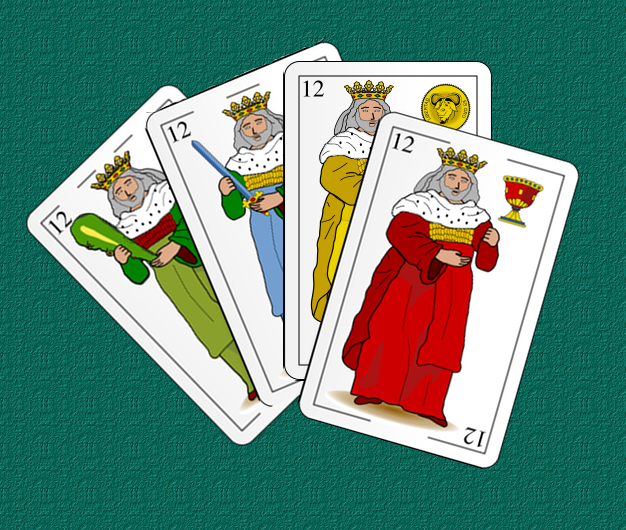
Chinchón is more than just a card game; it's a cultural phenomenon in Spain, sharing its name with a picturesque town southeast of Madrid and even a popular local drink. While some believe its name derives from the "Gin" in Gin Rummy, its charm is distinctly its own. It's also known by other names such as Txintxon, Chinchorro, Conga, or Golpeado, reflecting its widespread popularity and regional variations.
The fundamental objective of Chinchón is to combine your cards into valid sets (melds) and finish each round with the lowest possible score from your unmelded cards. The ultimate goal is to avoid being the first player to reach 100 points or more, forcing your opponent to cross that threshold instead. The game offers an exciting path to an instant win: forming a "Chinchón," a perfect 7-card straight without using a joker.
While Chinchón is traditionally played with a 40-card Spanish deck, a popular variant, which we will detail here, utilizes a standard 52-card deck. This version is especially accessible and introduces the unique role of the Ace of Diamonds as the game's designated joker, adding an intriguing layer of strategy. Regardless of the deck, Chinchón is typically a two-player affair, making it an excellent head-to-head challenge.
At its heart, Chinchón revolves around two key actions: creating "juegos" (melds) and "cerrar" (closing). Melds are combinations of cards that reduce your hand's value, while closing signifies the end of a round, triggering the scoring phase. Understanding these actions is crucial for any aspiring Chinchón master.
Mastering the Fundamentals: How to Play Chinchón
To truly grasp
como se juega al Chinchón, let's break down the mechanics, from setting up the game to making your strategic moves.
Setting Up the Game
The preparation for a game of Chinchón is straightforward, allowing you to jump into the action quickly:
1.
Players and Deck: For our detailed explanation, we'll assume two players using a standard 52-card deck. Remember, the Ace of Diamonds serves as the joker (Comodín) in this variant.
2.
Dealing Cards: Each player is dealt seven cards.
3.
The Piles: One card is placed face-up on the table to start the discard pile. The remaining cards are stacked face-down, forming the draw pile (mazo).
The Flow of a Turn
Gameplay in Chinchón proceeds in turns, demanding constant evaluation of your hand and the cards available:
1.
Draw a Card: At the start of your turn, you must choose to draw one card from either the face-down draw pile or the top card of the face-up discard pile. Strategic choice here is paramount; often, taking from the discard pile allows you to complete a meld directly, but it also reveals your intentions to your opponent.
2.
Form Melds (Optional): After drawing, you'll assess your hand to see if you can form any new melds or add to existing ones.
3.
Close the Round (Optional): Before discarding, if you believe you have sufficiently low "sobrantes" (unmelded cards), you can choose to "cerrar" (close) the round.
4.
Discard a Card: If you don't close, you must discard one card from your hand onto the discard pile, passing the turn to your opponent. The round continues until a player closes or the draw pile is reduced to just two cards, at which point the round is voided with no points scored.
Crafting Your Melds
Melds are the backbone of Chinchón, allowing you to reduce your hand's point value. There are two types:
*
Trios (Sets): Three or more cards of the same rank (e.g., three Queens, four 5s). Suits do not matter for trios.
*
Escaleras (Straights/Runs): Three or more consecutive cards of the same suit (e.g., 4-5-6 of Hearts, 8-9-10-Jack of Spades).
Crucially, the Ace always counts as 1 and can only be used at the beginning of a straight (A-2-3), not at the end (Q-K-A is not valid).
The Ace of Diamonds (Comodín) is a joker and can substitute for any card in a meld, making it incredibly powerful. However, its high point value if left unmelded makes it a double-edged sword.
The Pivotal "Closing" Action
Closing a round is a critical strategic decision. You can only close if, after forming all possible melds, your remaining unmelded cards sum up to 7 points or less. To close:
1. After drawing a card, ensure your unmelded cards are 7 points or less.
2. Discard one card face-down. This signals the end of the round.
3. Lay down all your melds on the table, along with your remaining unmelded cards.
Opponent's Response: Laying Off Cards
Once a player closes, the opponent must also reveal their melds. A crucial rule then comes into play: if the closing player has any unmelded cards (i.e., didn't close with zero points), the opponent gets a chance to "encajar" (lay off) their own unmelded cards onto the closing player's existing melds. For example, if the closer has a meld of 5-6-7 of Spades, and the opponent has an 8 of Spades, they can add it to that meld, reducing their own unmelded point total. This can significantly impact the round's score.
This interaction adds a layer of depth, as players must weigh the risk of leaving high-point cards unmelded if they close, knowing their opponent might discard them. For a deeper dive into specific rules and variations, check out our guide on
Chinchón Card Game Rules: Master Spanish Gin Rummy.
Understanding Chinchón Scoring: Points, Penalties, and Victories
Scoring in Chinchón determines the winner of each round and ultimately, the game. Understanding card values and special conditions is essential for successful play.
Card Values at a Glance
At the end of a round, any cards remaining in your hand that are not part of a valid meld contribute to your score:
*
Aces (except Ace of Diamonds): 1 point each.
*
Cards 2 through 7: Face value (e.g., a 4 is 4 points).
*
Face Cards (Jack, Knight, King): 10 points each.
*
Ace of Diamonds (The Joker): A whopping 25 points if left unmelded! This is why strategic use of the joker is so important; it can save your hand but punish you severely if you can't meld it.
Calculating Round Scores
Once a round closes, players sum the points of their unmelded cards. This total is added to their cumulative game score. The game continues with new rounds until one player's total score reaches or exceeds 100 points, making the other player the winner.
Special Scoring Scenarios
Chinchón features several exciting bonus and penalty scenarios that can dramatically alter the game:
*
Closing with Zero Cards: If you manage to close a round with *no* unmelded cards (a perfect hand), you don't just get 0 points; you receive a
-10 point bonus, effectively reducing your overall score.
*
Closing with Zero Cards and a 7-Card Straight (with Joker): Achieving a perfect 7-card straight of the same suit, but using the Ace of Diamonds as a joker, also grants a zero-point hand and a significant
-25 point bonus. This is a powerful move, but not the ultimate win.
*
Achieving Chinchón (The Ultimate Win): This is the pinnacle of the game and the namesake achievement! If you close a round with *all seven cards* forming a single straight of the same suit,
without using the Ace of Diamonds (joker), you automatically win the entire game, regardless of your opponent's score! This is the target for any ambitious player, giving the game its title: "Achieve Chinchón."
Advanced Strategies for Chinchón Success
Beyond knowing the rules, true mastery of Chinchón involves strategic thinking, risk assessment, and adapting to the flow of the game.
*
Reading Your Opponent: Pay close attention to the cards your opponent picks from the discard pile and the cards they discard. This can give you clues about the melds they are trying to form or the suits they are collecting. If they discard a certain rank, it might be safe for you to discard the same rank.
*
Managing the Joker: The Ace of Diamonds is powerful, but risky. If you can use it to complete a crucial meld early, it's often worth it. However, holding onto it too long, especially if you have other high-point unmelded cards, can lead to a disastrous round score if you can't meld it by closing.
*
When to Close: This is perhaps the most critical decision in Chinchón. Closing early can catch an opponent with many high-point cards, but it also gives them the chance to lay off cards and might prevent you from achieving a powerful Chinchón or a -25 point bonus. Conversely, holding out for a perfect hand is risky; your opponent might close first, or you could accumulate too many points. Always weigh your current hand's points against the potential for improvement.
*
Minimizing Unmelded Points: Prioritize melding high-value cards (face cards, and especially the Ace of Diamonds) first. If you have to hold onto unmelded cards, try to keep them low in value (Aces, 2s, 3s).
*
Blocking and Baiting: Sometimes, it's worth discarding a card your opponent might want if it forces them to take it, revealing their hand. Conversely, holding onto a card your opponent desperately needs can prevent them from closing or completing a valuable meld.
Mastering these nuances comes with practice. And to truly refine your gameplay, explore
How to Play Chinchón: Mastering Melds, Closing & Scoring for more in-depth strategies.
Chinchón is a game of constant calculation and adaptability. The thrill of chasing that elusive 7-card straight for an instant win, coupled with the pressure of keeping your unmelded points low, makes every round an exciting challenge.
Conclusion
Chinchón offers a rich and engaging card game experience, blending strategic meld-making with the excitement of an ultimate victory condition. Whether you're aiming to chip away at your opponent's score, strategically close with a negative bonus, or spectacularly achieve the coveted 7-card straight Chinchón, every round presents fresh opportunities and challenges. By understanding the card values, mastering the art of melding, and making astute closing decisions, you'll be well on your way to becoming a formidable Chinchón player. So gather a friend, shuffle the deck, and dive into the captivating world of Chinchón – may your straights be long and your scores be low!